
Residents of Melamchi, who are supplying water to the inhabitants of the capital Kathmandu, have not been able to receive the royalties they are legally entitled to.
Based on the rights granted by the Constitution, residents of Helambu Rural Municipality and Melamchi Municipality in Sindhupalchok have been demanding that royalties be provided from the Melamchi Water Supply Project to the affected local levels.
“If Melamchi’s water is distributed to Kathmandu residents for free, we do not need royalties,” says Nima Gyalzen Sherpa, Chairman of Helambu Rural Municipality. “However, since fees are collected from Kathmandu consumers, we have demanded royalties for the conservation of the source area and the development of the project-affected region.”
Juddha Bahadur Gurung, immediate past chairman of the National Natural Resources and Fiscal Commission, agrees with his demand. He states that since Kathmandu Upatyaka Khanepani Limited (KUKL) collects fees from consumers by distributing Melamchi's water, royalties must be provided for the development and conservation of the source area.
Under the Melamchi Water Supply Project, KUKL has distributed 52,90,44,90,000 liters of water. From this, tariff revenues totaling Rs. 52,90,44,943 were collected up to last February.
The Constitution of Nepal also provides that a certain portion of the benefits derived from the utilization of natural resources must be distributed to project-affected areas and local communities in the form of royalties, services or goods. According to Article 59, Clause 4 of the Constitution, the Federal, Provincial and Local levels shall make provisions for the equitable distribution of benefits derived from the use or development of natural resources. A certain portion of such benefits must be distributed to the project-affected areas and local communities as royalties, services or goods in accordance with the law.
For this purpose, the Constitution established the National Natural Resources and Fiscal Commission. Article 251 specifies the responsibilities of the Commission: “The main function of the Commission is to allocate natural resources and make recommendations to the Federal Government on matters relating to financial management.”
Even though it is provisioned in the Constitution itself, residents of the Melamchi Water Supply Project-affected areas have not received any royalties. On April 2, 2021, then-President Bidya Devi Bhandari inaugurated the distribution of Melamchi Water Supply Project water at Bhrikutimandap in Kathmandu. Nima Gyalzen, Chairman of Helambu Rural Municipality, asserts that they ought to receive royalties retroactive to that date.
Schedule 4 of the Intergovernmental Fiscal Management Act, 2017 defines natural resources as mountaineering, electricity, forests, mines and minerals, and water and other natural resources. A framework has been prepared and implemented to distribute royalties collected from these five types of natural resources at a rate of 50% to the Federal Government, 25% to the Provincial Government, and 25% to the Local Level.
Accordingly, royalty sharing is currently implemented for mountaineering, electricity, forests and mining. Royalty generated from hydroelectricity produced through water usage is also distributed. However, royalty sharing for drinking water projects has not yet been realized.
Local demands fall on deaf ears
Even before the distribution of Melamchi’s water to the Kathmandu Valley began, residents of the affected areas had demanded a guarantee of the royalties they were entitled to.
However, on July 5, 2020, water was diverted into the tunnel for testing before the royalty issue was settled. On April 2 of the following year, formal distribution of the water commenced.
At the very time of the water diversion, local representatives and stakeholders from Helambu and Melamchi protested, stating that water was diverted without addressing their demand for royalties and without even informing the local residents.
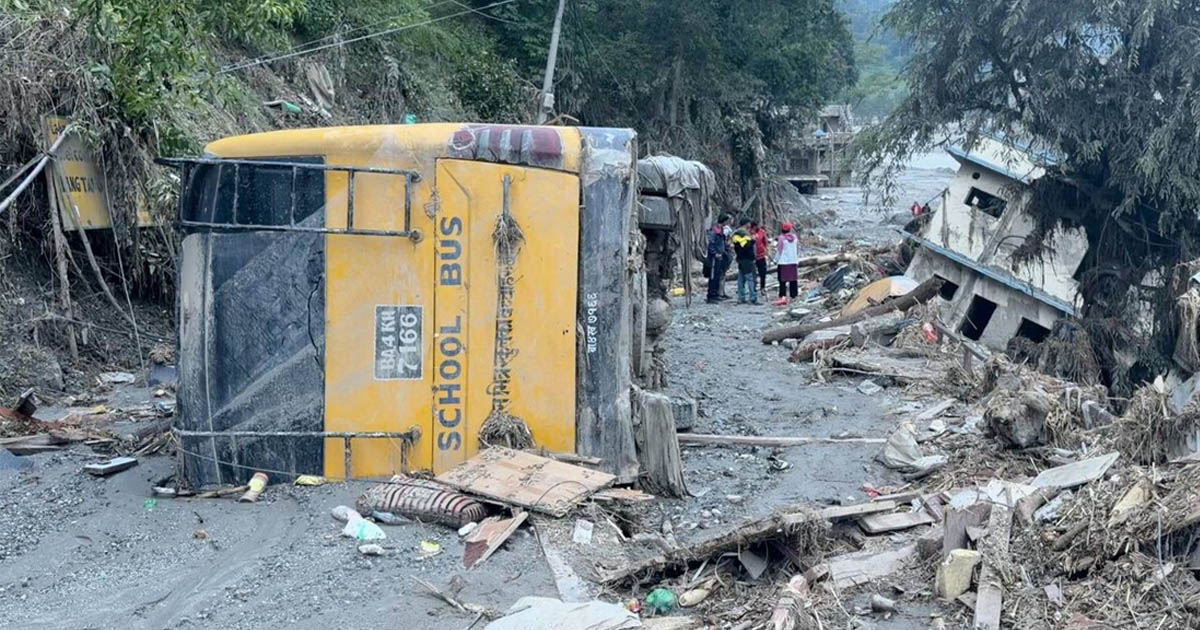
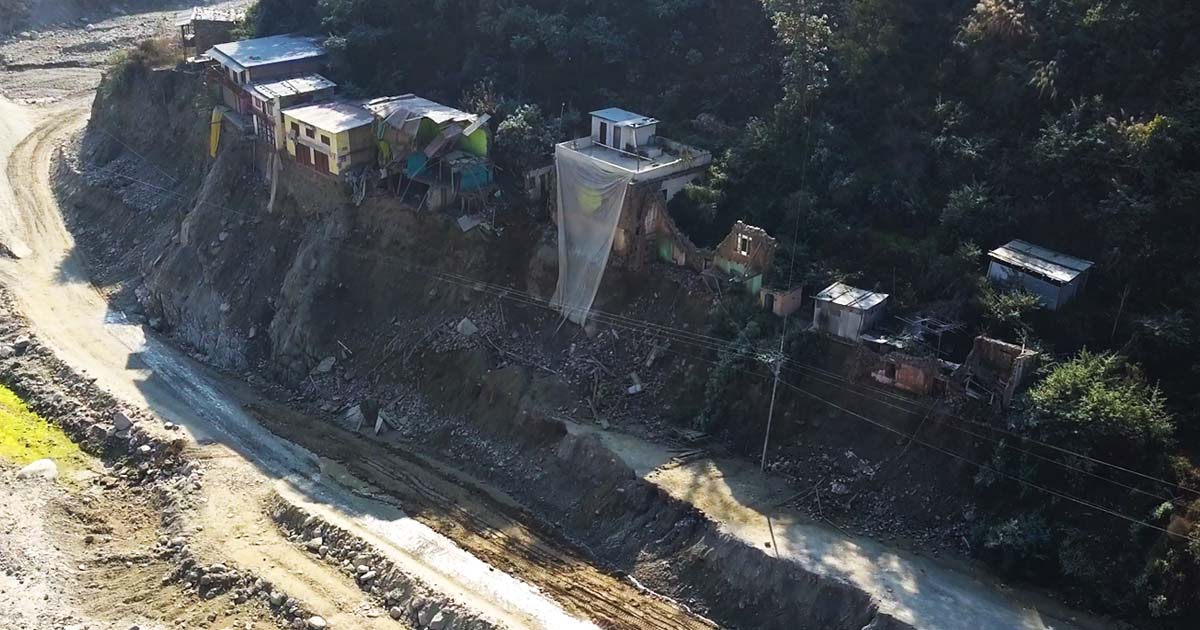
Less than three-and-a-half months after water distribution began in Kathmandu, a flood in the Melamchi River completely damaged the project’s headworks. Since then, local residents have repeatedly disrupted operations, demanding not only royalties but also a master plan that includes the rehabilitation of the Melamchi area, climate adaptation and measures for future risk mitigation.
On October 7, 2024, after residents of the Melamchi Water Supply Project area launched protests, then-Water Supply Minister Pradeep Yadav signed a 10-point agreement.
The first point of the agreement stated: “Kathmandu Upatyaka Khanepani Limited (KUKL) must provide 25% of the sales revenue generated from the volume of water received at Sundarijal after diversion from the Melamchi River in Helambu for the development of Helambu Rural Municipality.”
It was specified that this agreement would be finalized and implemented within three months following further discussions among stakeholder bodies. However, nearly two years later, the agreement remains unimplemented.
Citing non-compliance with the agreement, local residents reached the headworks area on November 6, 2025, and diverted the water back into the river. Following this, through the initiative of Kulman Ghising, then Minister for Energy, Water Resources and Irrigation, Physical Infrastructure and Transport, and Urban Development, another 15-point agreement was signed on November 11, 2025.
Point number 4 of that agreement states: “Regarding the determination of the royalty levy on drinking water distributed by the Melamchi Water Supply Project, a proposal shall be submitted to the Cabinet of the Government of Nepal within 45 days, in coordination with the National Natural Resources and Fiscal Commission and the Ministry of Law, Justice and Parliamentary Affairs, based on previous committee reports and related findings.”
Based on that agreement, a study team was formed in coordination with the Fiscal Commission and the Ministry of Law to permanently resolve the issue of royalties for the Melamchi Water Supply Project. The study report prepared by the team was supposed to be submitted to the Cabinet. However, nearly a year after the agreement was signed, the team has been unable to submit its report.
Joint Secretary Ramakanta Duwadi, who signed the 15-point agreement on behalf of the Ministry of Water Supply and the Ministry of Physical Infrastructure and Transport, states that policy work is underway to enable the payment of royalties.
The then-Ministry of Physical Infrastructure and Transport, Ministry of Urban Development, and Ministry of Water Supply have now been merged into the Ministry of Infrastructure Development. According to Ramakanta, who currently works at the Environment and Climate Change Adaptation Division of the Ministry of Infrastructure Development, drafting the royalty policy falls under the jurisdiction of the Policy Research Institute and the ministry has accordingly drafted and forwarded the proposal there. He added that because this will have a national-level impact, the institute is conducting further study to prepare a comprehensive framework.
According to Juddha Bahadur Gurung, immediate past chairman of the National Natural Resources and Fiscal Commission, while the Constitution of Nepal and the Intergovernmental Fiscal Management Act make explicit provisions for royalty sharing in hydropower and mining, no such clarity exists for drinking water projects. It is due to this legal vacuum that the government has faced difficulties in providing royalties directly to the local levels. However, he notes that the government has been allocating a set annual budget for the affected areas through the Social Upliftment Program.
What is the Social Upliftment Program?
The White Paper issued by the Melamchi Water Supply Development Board in February 2020 states that the Social Upliftment Program was implemented during the construction of the project for the socio-economic advancement of the residents of the Melamchi Valley.
The Social Upliftment Program is merely an internal execution unit under the Melamchi Water Supply Development Board. It forms part of the project’s Corporate Social Responsibility (CSR) wing under the Melamchi Water Supply Development Board, which operates under the Ministry of Water Supply. Juddha Bahadur Gurung explained that this unit was established as an integral component of the project based on the Water Supply Development Board (Formation) Order, 1998, and the loan agreement with the donor agency, the Asian Development Bank.
Pursuant to the Associations Registration Act, 1977, the Hyolmo Sindhu Melamchi Valley Social Upliftment Program Operation Committee was registered at the District Administration Office, Sindupalchok, Chautara on February 24, 2010. The White Paper mentions that this program was operated through four committees, including the aforementioned one. It encompassed the former 35 Village Development Committees (VDCs) in the project-affected areas of Sindhupalchok and Kavrepalanchok districts.
This program operates in accordance with the Social Upliftment Program Operation Directives, 2007. These directives authorize the program to select projects and expend budget. Juddha Bahadur, the immediate past chairman of the Commission, informed that expenditures under this program are audited by the Office of the Auditor General.
Point No. 177 of the Budget Speech for Fiscal Year 2022/23 dissolved both the Melamchi Water Supply Development Board and the Rural Water Supply and Sanitation Fund Development Board. Until then, the board had been responsible for operating, monitoring, inspecting and directing the Social Upliftment Program in accordance with prevailing laws. Following the dissolution of the board, funding for the Social Upliftment Program was also frozen, bringing development activities in the affected regions to a complete standstill. Local residents expressed severe dissatisfaction over this disruption.
Amid the uncertainty surrounding the project’s work, a Cabinet meeting issued the Melamchi Water Supply Development Board (Formation) Order, 2023 on April 3, 2023, reviving the board. Following the revival, a budget of Rs. 80 million was allocated for the Social Upliftment Program.
Under the current federal setup, local governments have been demanding that the Social Upliftment Program budget be routed directly through the respective local levels. Madhu Timilsina, Information Officer at the Melamchi Water Supply Development Board, stated that because local committees of the Social Upliftment Program also demanded direct authorization to spend those funds, the resulting dispute led to the budget freezing.
Royalty proposal was made 25 years ago
In the Environmental Impact Assessment (EIA) report of the Melamchi Water Supply Project conducted in 2000, royalties were also mentioned under Clause 4 on Social Strategy Implementation Arrangements within the Socio-Economic Environment section. It stated that during the post-construction operational phase (from the seventh year onwards), royalties would be collected from the tariffs paid by drinking water consumers in the Kathmandu Valley.
At the time this Environmental Impact Assessment report was prepared, the country was under a multi-party system with Birendra Bir Bikram Shah as king. Since then, not only has a republic been established in the country but the entire system of governance has transformed. With the promulgation of the Constitution of Nepal in 2015, the country entered federalism, establishing three tiers of government.
The constitutional provisions regarding the National Natural Resources and Fiscal Commission paved the way for local and provincial governments to receive royalties generated from natural resources, including water resources. Consequently, local representatives and political parties began taking a legal stand that drinking water projects must also yield royalties.
As the tunnel excavation work for Melamchi neared completion, the local levels in the affected area (Helambu Rural Municipality and Melamchi Municipality) began demanding that a clear royalty policy be established before sending water to Kathmandu.
Water supplied for only 33 out of 60 months
According to the Report of the Office of the Auditor General, 2026, the Melamchi Water Supply Project, aimed at supplying 510 million liters of water daily to the Kathmandu Valley in its first phase through a 25.92-kilometer tunnel, began in FY 1998/99 with an initial completion target of FY 2007/08. However, as work had not commenced by that time, the timeline was revised, followed by several subsequent extensions.
Water distribution to Kathmandu began on March 28, 2021, even before the project work was fully completed (prior to the completion of the permanent headworks and water filtration system).
Five days later, on April 2, 2021, then-President Bidya Devi Bhandari officially inaugurated the water distribution at Bhrikutimandap. The Auditor General’s report notes that physical progress on the Melamchi Water Supply Project stood at 99.52% at that time.
Less than three-and-a-half months later, massive flooding in the Melamchi River completely destroyed the project’s headworks. Roughly a year later, water was brought back to Kathmandu by constructing a temporary diversion dam.
The Melamchi Water Supply Project currently operates merely as a seasonal winter project. Between mid-March 2021 and February/March 2026, a span of 60 months, Melamchi water reached Kathmandu for only 33 months. Melamchi water was distributed in Kathmandu for the first time on a trial basis on March 28, 2021.
However, KUKL stated that it only possesses data from March/April 2023 onward, as the Sundarijal Water Treatment Plant was formally handed over only then. KUKL statistics show that during the 35-month period from then until February/March 2026, Melamchi water flowed for just 25 months, during which a total of 52,904,494,000 liters of water was distributed. Tariff collections from consumers for this period totaled Rs. 529,044,943. KUKL charges a monthly tariff of Rs. 100 for consumers using up to 10,000 liters of water per month.
Bal Mukunda Shrestha, former Executive Director of the Melamchi Water Supply Development Board, states that given the overall project cost, the tariffs being charged are nominal. The revenue generated barely covers staff salaries and maintenance expenses. He noted that if a provision is made to pay royalties to the local levels, additional fees would inevitably have to be collected from consumers.
Madhu Timilsina, Information Officer at the Melamchi Water Supply Development Board, emphasizes that although constitutional provisions exist for royalty distribution, the issue of royalties cannot be viewed through a single uniform lens.
According to him, one must examine the operational framework of hydropower projects currently paying royalties versus the operational model of the Melamchi Water Supply Project.
“The Melamchi project operates on a cost-recovery model. We collect funds to return to the government,” he explained. “That may not be the case for authorities or hydropower projects.”
Information Officer Madhu further noted that KUKL continues to supply water at the same tariff rates established in 2009, meaning there is no alternative to raising consumer tariffs if royalties are to be paid.
Access to water supply and sanitation is enshrined as a fundamental right in the Constitution. Under these circumstances, Juddha Bahadur, immediate past chairman of the Commission, observes that the government faces the challenge of finding a middle path that balances the rights of affected local residents with those of Kathmandu consumers who utilize Melamchi’s water.
Over Rs 32 billion spent, main dam still unbuilt
According to the Auditor General’s report, a total of Rs. 32.3447 billion has been spent on the construction of the Melamchi Water Supply Project to date.
The report notes that in FY 2025/26 alone, Rs. 579 million was spent on reconstructing the project’s headworks, which suffered total destruction during the 2021 floods. As per the report, the project’s permanent dam has still not been constructed and the government has extended the deadline to construct a permanent dam until FY 2030/31.
Accordingly, a total budget of Rs. 7.26 billion has been allocated for the Melamchi Water Supply Project in the FY 2026/27 budget. This allocation is earmarked to complete feasibility studies for diverting water from the Yangri and Larke rivers into the Melamchi system, as well as to initiate pipeline network expansion across Kathmandu Valley locations such as Kirtipur, Madhyapur Thimi, Jorpati, Pepsicola, Nagarjun and Mahalaxmi.
Despite the expenditure of billions of rupees, Melamchi water cannot be distributed to Kathmandu on a regular basis. Damaged by severe flooding less than three months after initial distribution began, the Melamchi Water Supply Project currently operates merely as a seasonal winter project, offering temporary relief to Kathmandu’s water demand.
For the project’s long-term water diversion, preparations are underway to relocate the headworks from its flood-damaged location at Ribarma in Helambu-1 to Sarkathali, roughly one kilometer upstream. Until a new headworks is built in Sarkathali, there are plans to construct a reinforced temporary dam at the current intake point.
According to Information Officer Madhu, detailed design work is currently underway for the construction of the headworks at Sarkathali, though the design has not yet been approved. Once the detailed design receives approval, the procurement process for construction is expected to begin in early November. For this project, an agreement of $185 million (Rs. 28.38 billion at the current exchange rate) has been signed between the Asian Development Bank (ADB) and the Government of Nepal.
He further informed that under Sub-project 2 of the water supply initiative, the redesigning process for the Yangri and Larke rivers is also in progress.
Please adhere to our republishing policy if you'd like to republish this story. You can find the guidelines here.
Comments