
Marginalized communities who were repeatedly displaced by floods and landslides and settled in Madi, Chitwan, remain unsafe even in their current location. Living in extreme poverty, they are also at high risk of gender-based violence, labor exploitation and human trafficking.
Krishna Bahadur Chepang (72), living on the banks of the Parbi Stream in Madi Municipality-9, Chitwan, arrived here after being displaced for the sixth time. On the night of September 7, 1985, a flood and landslide in his ancestral home in Dhading left him without food or shelter. His series of displacements began that very night.
In search of shelter, Krishna Bahadur moved with his family to Sagbari in Madi-9, Chitwan. But just two years later, a landslide uprooted them from there as well. From Sagbari, he moved to Kusumkhola, also in Madi-9.
He stayed in Kusumkhola for three years. He dragged timber from the forest to build a wooden house, cleared unregistered land and made a field capable of yielding approximately 1.4 metric tons (20 muri) of paddy. His four sons and three daughters grew up there. But around 1990, Chitwan National Park drove him away, citing that he was living in the buffer zone. “I had built that house with so much hard work, but in a single night, they used elephants to destroy it completely,” he recalled.
After being driven away by the national park, he moved to Chharchhare Chisapani in Madi-5. In 1996, the park authorities set fire to his home there. According to the Department of National Parks and Wildlife Conservation, the arson occurred while attempting to remove structures built by encroaching on the buffer zone.
Krishna Bahadur then moved with his family to Govinda Basti in Thulochhange, Madi-9. In 2017, a flood swept away his house there. Yet, Krishna’s story of displacement did not end there.
After the flood washed away his home, he went to a place called Kharkatta in Madi-8. Local residents drove him away from there within a few months, calling him a squatter. After that, he arrived at the banks of the Parbi Stream in Madi-7.
The land where Krishna Bahadur is currently living on the banks of the Parbi Stream is unregistered public land. The annual floods keep eroding the land. He has no idea when he might have to pack up his belongings and leave again. Having been displaced from six different places over four decades, Krishna Bahadur says, “Now, these old bones cannot go anywhere.”
Krishna Raj Adhikari, the former ward chairperson of Madi-8, is well aware of Krishna Bahadur’s pain of displacement. “The old man was troubled sometimes by floods and sometimes by the national park. The place he lives in now is also on the riverbank. Embankments have been built to protect against floods but you never know,” Adhikari said.
Due to repeated displacements, Krishna Bahadur was unable to educate his children. Once they grew up, all four sons left for India. Among them, two are completely out of contact.
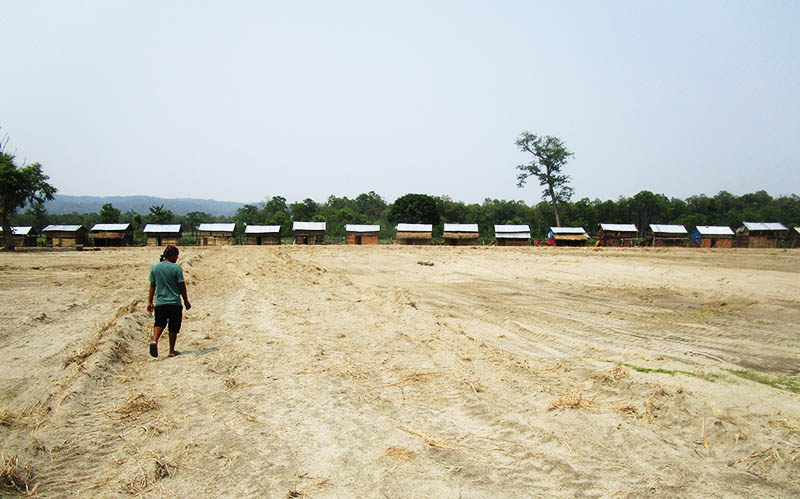
Another person who went through a series of displacements is Hai Kancha Praja (56) from Pyauli, Madi-9. In 2012, a flood swept away his ancestral house and registered land in Silinge, Makawanpur. In search of shelter, he then reached Kusumkhola in Madi. But in 2017, a flood drove him away from there as well.
Hai Kancha moved to Pyauli with his family. However, the very year they relocated, floodwaters from the Riu River entered the settlement. Currently, they are still living on the banks of the Riu River.
“Right now, we are living here, but our hearts are filled with constant fear. This is a place that was completely devastated by floods before as well,” says Hai Kancha.
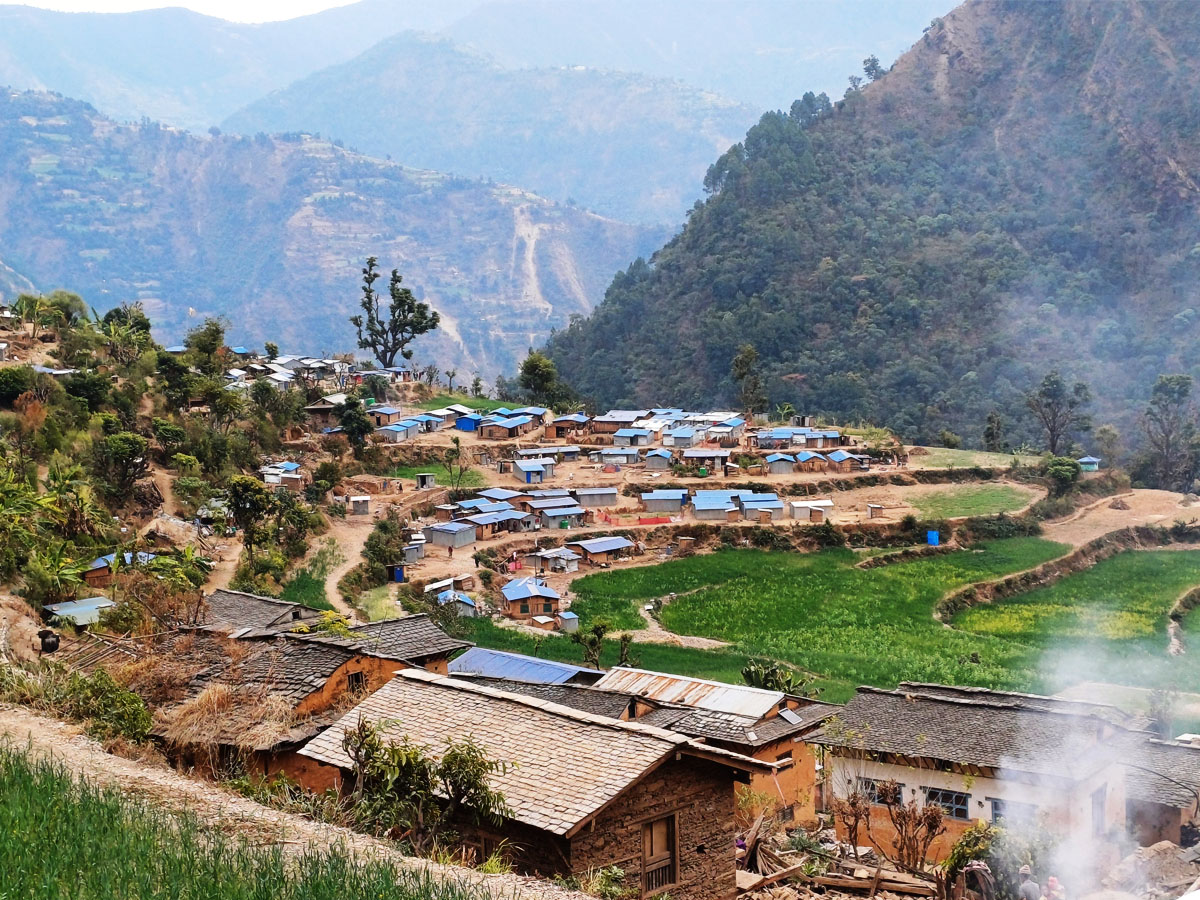
Repeated floods and landslides in the Kusumkhola area of Madi-9 have left many families homeless. The vast majority of those displaced belong to the Chepang community. The 2017 flood alone rendered 225 families in Kusumkhola homeless. Madi Municipality did relocate those families but the new locations also happen to be on the banks of another river.
According to Ghanshyam Dawadi, the ward chairperson of Madi Municipality-9, those displaced by the Kusumkhola flood have been relocated to Pyauli, Shivadwar, Parbi, Bandarjhula and Krishnanagar areas. According to municipal data, 82 households were relocated to the Chepang Model Settlement in Krishnanagar, 55 to Parbi, 45 to Pyauli, 28 to Bandarjhula and 15 to Shivadwar. He says that some families settled in Bandarjhula on their own initiative and have not come into contact with the municipality.
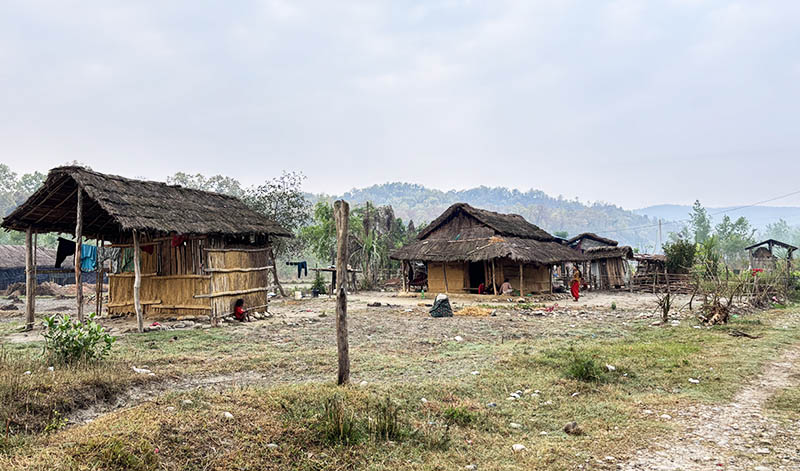
Most of the houses of the families displaced back then remain in a dilapidated condition today. However, some houses in Krishnanagar were built with support from the government and social organizations. All other settlements are located along streams and riverbanks. Regarding the reason for relocating settlements to high-risk areas, Ward Chairperson Ghanshyam says, “Even though there are streams and rivers, we have constructed embankments. Repairs are also ongoing on them right now. If a small flood comes, nothing will happen, but if a big one strikes, we cannot say.”
Section 52(B), Sub-section 4 of the Lands Act 1964 (Eighth Amendment) states that land on river, stream or canal banks, in high-risk areas, or within national parks and protected areas shall not be provided to landless squatters. Madi Municipality has not issued land ownership certificates to them but because victims displaced by disasters were relocated directly to riverbanks, the risk of another catastrophe looms.
However, the municipality states that efforts are underway to make the areas where they have been settled safe. Dandapani Paudel, spokesperson for Madi Municipality, says, “After those displaced by the Kusumkhola flood were settled along various riverbanks and stream banks, embankments were constructed. Work is also ongoing to make the places where they are living even safer.”
Risk of violence and trafficking
After a landslide swept away their house in Silinge, Makwanpur, in 1993, a Praja family moved to Madi-9, Kusumkhola. They took shelter under a thatched roof on unregistered public land.
While the family was still coping with frequent floods in Kusumkhola, a landslide in 2015 displaced them once again. The family of eight, including husband, wife and six children, began struggling just to feed and clothe themselves. The Praja couple then turned to daily-wage labor. A short while later, the husband fell ill with diarrhea and pneumonia and passed away.
Following her husband’s death, the children were scattered among distant relatives and the wife remarried. One day, their 15-year-old third daughter, Rupa (name changed), was trafficked for 12,000 rupees at the hands of her own relatives.
Promising to fund her education, a family brought her to Dhankuta in 2023. Once in Dhankuta, Rupa was not allowed to study. Instead, she was forced to work in a hotel. Not only that, she also had to massage the landlord’s daughter’s feet every evening.
Rupa made a friend in Dhankuta whose maternal home was in Bandarjhula. That friend’s mother informed Rupa’s family about her plight. Following this, through the joint efforts of Samari Utthan Sewa, the police, and the local government, she was rescued that same year in 2023.
“After finding out that she had been taken to Dhankuta under the pretext of supporting her education and put to child labor, we rescued her,” said Shivahari Gyawali, Program Director at Samari. According to him, Rupa is currently pursuing her education under Samari’s care.
This is a representative incident illustrating the extreme hardship families face after being caught in the grip of floods and landslides. Others like Rupa, who have suffered labor exploitation and human trafficking, can also be found across displaced settlements in Madi. Some have even fallen victim to sexual violence.
Samari Utthan Sewa conducted a study on the ‘Entertainment and Hospitality Sector and the Risk of Internal Human Trafficking.’ The study covered 420 households across flood- and landslide-affected areas in Madi Municipality-8 and 9, Rapti Municipality-1, 2 and 5, and Bharatpur Metropolitan City-2.
According to the study, 9.5% of the people in those areas work in the entertainment sector. Among the women working there, 85.5% suffer sexual violence and exploitation. Furthermore, 13.6% of those engaged in labor are children aged between 10 and 14.
According to Parusun Paswan, in-charge of the Basic Health Service Center in Bandarjhula, Madi-9, a local organization is currently funding the education of 30 orphaned children in Bandarjhula, a settlement heavily populated by flood and landslide victims. “There are many other children here living under single guardianship as well,” he said. “Parents here go to places like Delhi, Ladakh and Kashmir in search of work. The trend of getting remarried there and abandoning children in the village is evident, which has also left many children stranded.”
According to Parusun, more women than men have gone abroad for employment from Bandarjhula. “Women here also work in the entertainment sector. There are also reports of them falling victim to human trafficking,” he noted, based on discussions with locals during health surveys. “This settlement has existed since 1993. Some people came here after being repeatedly displaced. Those whose lives were hit by floods right in this place are becoming poorer and poorer.”
Bina Thapa, an executive member of Madi Municipality and a resident of Bandarjhula, Madi-9, states that cases of polygamy are high in Chepang settlements displaced by floods and landslides. “Many marry at a young age, have children, and later leave their sons and daughters behind to marry someone else. That is why many children are living under the care of relatives,” she said. “Children who do not have their parents by their side face a much higher risk of falling into wrongdoing. The root cause of all these problems is poverty.”
Two years ago, a 17-year-old girl from a family living in Bandarjhula after being displaced by floods committed suicide. “Being poor, I couldn’t fulfill my children’s needs. My fourth daughter had gone to Bharatpur to earn on her own. Who knows what happened there? We suddenly received news that she had committed suicide,” said the girl’s father, Rupak (name changed).
Rupak, a father of seven children, had also left his ancestral home in Lamjung with his family after the 1990 flood and arrived in Bandarjhula, Madi. They were making a living by farming unregistered public land. While the Bhimire Stream was continuously causing them trouble, a massive flood struck in 2005, destroying fields that used to yield 1.9 metric tons (27 muri) of paddy.
There was no other source of income. Rupak struggled to support his family of nine. He was unable to educate any of his seven children, including six daughters and one son. Three of his daughters moved to the city to earn money. His fourth daughter was working in the entertainment sector in Bharatpur, something the family was completely unaware of. While living there, she committed suicide inside her own room. “If I had been able to educate her properly and guide her path, I wouldn’t have lost my daughter. But what could I do? I was helpless,” Rupak said.
Rupak’s financial condition remains unchanged today. He lives by the riverbank. Crops are destroyed by wild animals at times and lost to river cutting at others. Living inside the buffer zone, there is also constant worry about being evicted by the state at any moment.
The story of a village called Pyauli, which also falls under Madi-9, is similar. It is known as a settlement of flood-displaced families. The risk of flooding persists here as well. Women here have taken the path of foreign employment in hopes of escaping the vicious cycle of poverty. However, their suffering did not end after going abroad. Instead, it grew worse. Binda (name changed) is one such example.
Displaced by floods, Binda had moved from Lothar in Makawanpur to Kusumkhola in Madi, and eventually to Pyauli. Facing riverbank erosion and trouble from wild animals, it became difficult to manage the responsibility of educating four children on her husband’s monthly income of 10,000 rupees. Taking a loan of 300,000 rupees, Binda flew to Kuwait. Violence against her began the very day she arrived in Kuwait.
“The workload was heavy. If things didn’t go as expected, they would pinch me, pull my hair and make me stand for 24 hours straight. They would lock me in a room and beat me. They even broke my hand,” Binda recalled her hellish experience in Kuwait. “The employer used to say, ‘I bought you, pay back the money and then leave.’ I even tried to commit suicide. But because the windows were high up, I couldn’t hang my shawl.”
When the violence crossed all limits, Binda secretly contacted her husband and explained her condition. After her husband in Nepal threatened the agent with police action, she was rescued.
Binda says, “I returned from abroad saving my life but there is no source of income here. The land I farm on is unregistered public land. When we plant crops with hard work, wild animals eat them. When floods come during the monsoon, we have to abandon our home and take refuge in someone else’s place, we can’t sleep all night.”
According to Binda, at least 12 women in Pyauli are currently enduring similar exploitation abroad.
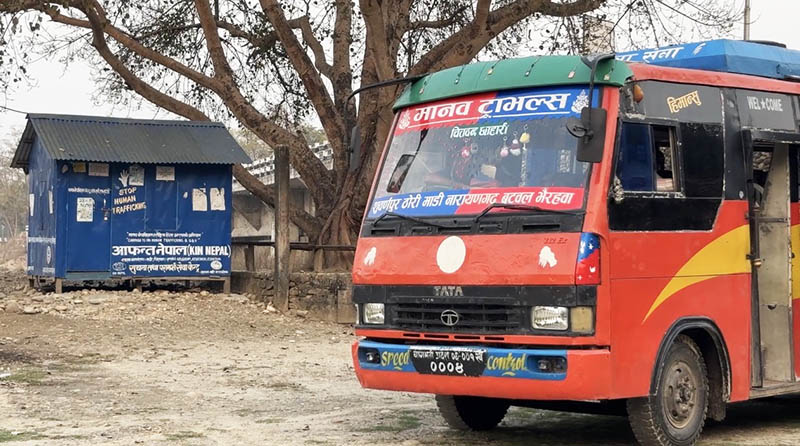
Areas such as Pyauli and Bandarjhula, where flood victims reside, border India. Because vehicles depart from the Madi bus park heading directly to Indian border villages, the risk of human trafficking is exceptionally high. Considering this risk, the organization ‘Aafanta Nepal’ has been operating a Border Monitoring Center (Help Booth) at the Madi bus park with the aim of ending human trafficking and gender-based violence.
Through this center, 8,976 individuals have received counseling and awareness services over the past five years. During the same period, the organization rescued 180 people from this location. Those rescued include women and children who suffered violence and rape, those affected by family breakdown, and those heading to India unknowingly. They belong to Dalit, Janajati and minority communities.
Bandana Sharma, a border monitoring facilitator for Aafanta Nepal, notes that girls under the age of 18 rescued from the border point are illiterate, affected by family breakdown and living in poverty. “In most cases, they do not appear to be under parental protection,” she said.
According to data from the Human Trafficking Bureau, 53 people, including 33 women, 17 girls and three men, were trafficked from Chitwan district over the past seven years. Bureau Spokesperson Rajan Limbu stated that this statistic includes victims of both internal and international trafficking. “Human trafficking incidents in Chitwan remain at a consistent level every year,” he said.
Greater concentration of problems in Ward No. 9
According to a study by the organization Samari, which focuses its work in Madi Municipality, 37% of households fall under the poor category in Madi, which has a population of around 38,000. Among those migrating from Madi, 28.6% stated that they moved to new places in search of employment. According to the 2021 National Census, 4.4% of those who migrated from the municipality cited natural disasters as the reason.
Areas such as Pyauli and Bandarjhula, which endure severe human trafficking, forced involvement of young girls in the entertainment sector, extreme poverty and the brunt of repeated displacement, fall under Ward No. 9 of Madi. This is the least literate ward in the entire municipality.
According to the latest census, 41.8% of houses in Madi Municipality are made of mud, with the highest concentration of mud houses located in this ward. Such homes are at higher risk from climate-induced disasters.
Data from the census also shows that Ward No. 9 is the most backward region among Madi’s nine wards. This ward has low toilet coverage and a higher prevalence of temporary homes made of bamboo and wood. It is the ward with the highest poverty rate. The number of persons with disabilities is also higher here compared to other wards. The census further indicates that internet access is exceptionally low.
According to Samari Utthan Sewa’s study, 41 disaster events, including floods, were recorded in Madi between 2011 and 2022, resulting in 29 deaths. Researcher Shivahari Gyawali notes that Ward No. 9 remains the most severely affected by disasters.
He also shared that social problems are particularly acute among the Chepang community in Wards 7, 8 and 9 of Madi, who reside on unregistered public land and rely entirely on agriculture. “Because floods and landslides have repeatedly displaced them, they are trapped in the flames of deprivation.”
According to environmental researcher Menuka Maharjan, climate change has recently rendered the timing of disasters unpredictable in Chitwan. She stresses that residents of Madi should not consider June-August as the only risky months. “The people of Madi need to prepare under the assumption that floods can occur in other months as well,” she said, “Otherwise, the heaviest toll will continue to be borne by the poor, marginalized and agriculture-dependent families.”
Two years ago, a study titled ‘Flooding Induced Migration and Adaptation Strategy’ was conducted focusing on Chitwan. Menuka, who carried out research in Madi Municipality under this study, shared that access to home, land and livestock insurance in the region was found to be exceptionally low. “The lower class here suffers on all fronts,” she said. “Even the traditional methods indigenous communities used to store grain appear to be disappearing due to changing rainfall patterns.”
The most severe impact of climate change also falls on the same community
A study titled ‘Diverging from Agriculture-based Livelihoods: Environmental Migration in Nepal’ points out that water-related risks have heightened due to drought or irregular rainfall, warning that this trend will escalate further. The study report mentions that this harms crops and livestock rearing, leads to a decline in income and employment, and ultimately increases human migration and overseas displacement.
According to another study focused on Chitwan, annual temperatures have increased by 0.043°C and rainfall by 0.93 mm over a 30-year period. A study published in the journal Climate Sciences also shows that climate-induced hazards such as drought, floods, irregular rainfall and hailstorms have brought widespread changes to the farming practices of Chitwan’s farmers. Among the farmers surveyed, 63.51% stated that climate change has significantly impacted agricultural production.
According to a 2017 study on participatory assessment of climate sensitivity and impacts in Chitwan’s Madi Valley, the effects of climate change have become clearly and catastrophically visible at the local level. It was found that poor and marginalized ethnic communities are more severely affected by climate risks, particularly due to their residence in environmentally sensitive and high-risk areas alongside their limited capacity to adapt.
“It is essential to formulate effective adaptation strategies targeting vulnerable communities but reliable climate data and information are unavailable at the local level due to a lack of weather monitoring stations,” the study report states. Although studies highlight that the marginalized and poor are worst affected by climate change, their total lack of access to state resources is evident right from the situation in Madi.
The connection between the climate crisis and internal migration was also confirmed by a study published in 2024 titled ‘Policy Brief: Enhanced Social Protection for Internal Migrant Workers in Nepal’. According to the study, 94% of internal migrant workers in Nepal suffer the negative impacts of climate crises in both their origin and destination places. Twelve percent of workers had to abandon their ancestral homes due to disasters and long-term climate change. This indicates that nearly one million of the country’s workforce has been displaced due to climate-related factors. The study estimates that if environmental imbalance and changes in rainfall and temperature continue at this rate, nearly 7.9 million Nepalis will soon be directly affected by climate-related issues.
According to the study, the migration pattern between Madi Municipality and Bharatpur Metropolitan City in Chitwan is completely opposite. Over the past three years, a total of 569 people left Madi, while 391 entered. That means 178 more people moved out than moved in. In Bharatpur Metropolitan City, only 9,331 people left, while 26,146 moved in.
Among those who migrated to Madi, many have taken shelter in high-risk areas along riverbanks. Most of them do not have land registered in their own names. They also lack the financial capacity to migrate to well-serviced cities like Bharatpur. For that reason, they remain stuck, facing climate-induced disasters and extreme poverty.
After floodwaters wash away their home on one side of a river, they move to the opposite bank of the same river and set up a new hut. “Because of this, the marginalized, poor, low-income, backward and unable-to-migrate communities of Madi are set to bear an even heavier brunt of future climate change,” expressed climate expert Ngamindra Dahal with concern.
What is the Solution?
Dinanath Bhandari, a disaster risk reduction and management expert and author who has long worked in the geographical and social environment of Chitwan, notes that indigenous livelihood strategies sometimes tie people to specific locations.
“The lifestyle of the Chepang community, in particular, revolves around forest areas and riverbanks,” he said. “The cause of their harrowing condition is not just natural crises but the cumulative result of continuous state neglect, an exploitative social structure, and a flawed administrative system that has persisted for centuries.”
As Dinanath points out, the consequences of structural apathy and governance neglect are visible in every corner of Madi. Seventy-two-year-old Krishna Bahadur Chepang, who has been facing a cycle of displacement since 1993, is living precariously on unregistered public land along the banks of the Parawi River in the latter stage of his life. In Pyauli, Madi, Rupa Praja (name changed), who was driven away by floods, fell into the trap of human traffickers while trying to escape the insecurity of unregistered land and low income. She suffered labor exploitation abroad and got trapped in a deep quagmire of debt.
On the other hand, residents of Bandarjhula, which falls within the buffer zone of Chitwan National Park, have neither access to electricity nor guaranteed employment. Even when wild animals destroy crops grown through their hard labor on unregistered land, they receive no compensation from the state because they do not possess land ownership certificates.
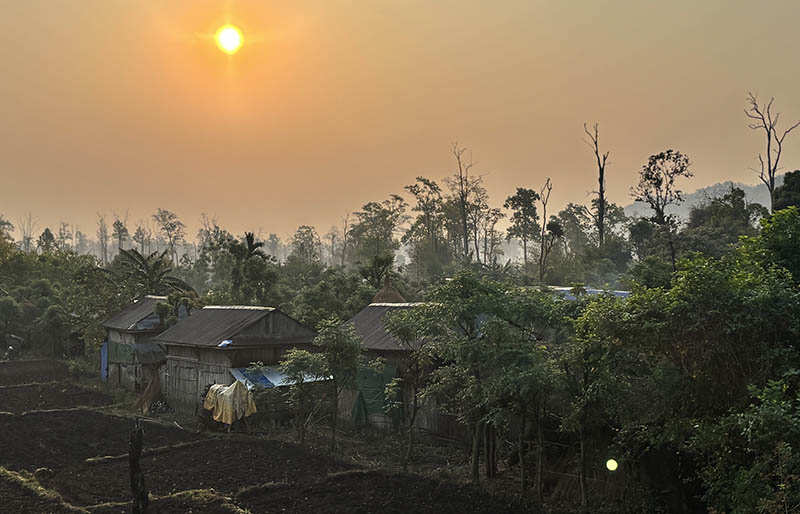
According to the Relief Distribution Guidelines for Damage Caused by Wildlife, 2023, farmers must mandatorily present documents proving land ownership to receive relief funds for crop damage caused by wildlife.
When members of families facing multidimensional hardship step out to seek employment, they end up suffering exploitation instead. Many young girls are forced to work in the entertainment sector, where escaping the vicious cycle of labor exploitation and sexual violence is extremely difficult.
Disaster risk reduction and management expert Dinanath says, “Ravaged by both natural and human-made crises, these communities continue to live with their lives hanging in the balance. This is the result of the state’s corrupt administrative system.”
Ishwari Bhattarai, a researcher on climate change and migration, also views the plight of the displaced in Madi as extreme neglect by the state. “The government’s responsibility is not fulfilled merely by rescuing flood victims and moving them to another location,” he said. “To resolve the social crisis there, the economic status of the displaced must be uplifted. Until they become economically resilient, they cannot escape falling into the vicious trap of crimes like violence and human trafficking.”
According to Ishwari’s analysis, the main reason post-disaster rehabilitation plans in Nepal are ineffective is the oversight of livelihoods. “The displaced are simply left with a house and land. No attention is paid to the fact that unemployment can worsen social problems and drive people back to their old, unsafe ancestral grounds,” he noted.
He emphasizes that for the indigenous and displaced communities of Madi who bear the brunt of climate change, the state must mobilize funds from climate funds or other resources to invest in their welfare. “The need and obligation of the state exist precisely for those citizens who cannot afford their own upliftment,” he said.
Climate expert Ngamindra Dahal states that given Chitwan’s, and specifically Madi’s, unique geographical layout and potential crises from an environmental perspective, vulnerable communities must be provided with early warnings and protection. According to him, Madi experiences not only heavy rainfall but also occasional cloudbursts, which trigger flash floods.
“There are high hills on both sides of Madi. Clouds carried by winds blowing from the south get trapped in Madi’s sky,” he explained. “While high-altitude clouds cross over the hills, lower-altitude clouds stay trapped in the valley. Ultimately, a cloudburst occurs, bringing torrential downpours and triggering flash floods.”
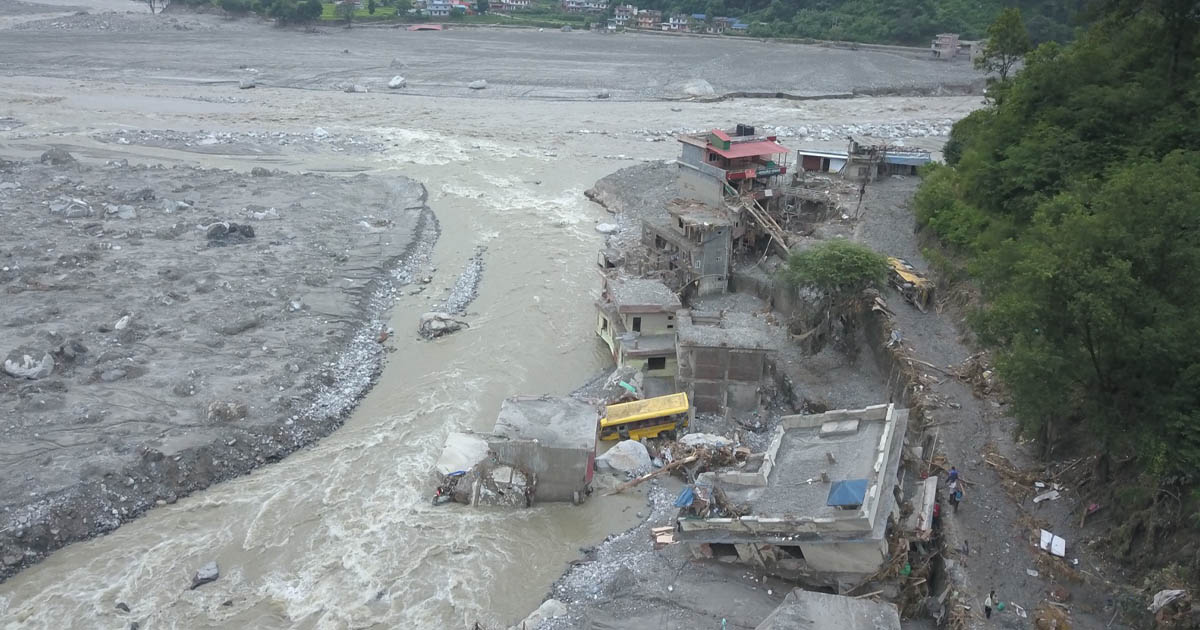
Because Madi also includes hilly terrain, monsoon streams become exceptionally aggressive during the rainy season, according to Ngamindra’s analysis. Warning that a devastating disaster similar to the one at Roshi River in Kavre two years ago could repeat in Madi, he notes that during floods, debris flows ten times more than the volume of water.
“The local government must immediately conduct a serious study on this and classify high-risk zones (red areas),” he suggested.
He sharply criticizes the practice where the state fails to recognize squatters living on unregistered public land as citizens. Climate expert Ngamindra says, “They are the ones who need the state’s support the most. But ironically, the very government laws prevent those in need of help from receiving services and facilities. The Chepang community farming on unregistered land being deprived of compensation even for damage caused by wildlife is a cruel example of this.”
Madi Mayor Tara Kumari Kaji Mahato is also aware of this severe social condition of the displaced Chepang community in Madi and the potential risks looming over them.
She admits that the municipality has not been able to do expected work to uplift the living standards of displaced families and increase their access to education. “They are economically very weak. We still haven’t been able to bring all children to school,” she said. “Despite our efforts, we haven’t been able to give expected attention to all areas. There has been some improvement compared to before but much work remains to be done.”
Mayor Tara Kumari also stated that there is no safe land elsewhere to relocate the displaced population. She feels that installing at least an early warning system (siren) to protect vulnerable settlements could reduce loss of life and property. However, she noted that this is not immediately possible due to the municipality’s limited resources. “For this, the central government itself needs to create a special project and allocate a budget,” she said.
According to Mayor Tara Kumari, multidimensional social crises stemming from displacement and poverty cannot be resolved all at once. “Poverty is the root of violence, trafficking and social problems. Realizing that economic empowerment is needed for this, we also provided various skill-based training programs for women. However, the results have not turned out as expected,” she said.
In collaboration with Report for the World. Please adhere to our republishing policy if you'd like to republish this story. You can find the guidelines here.
Comments