
In most human trafficking cases, the perpetrators turn out to be close relatives. Because the offenders are family members, victims refrain from filing complaints. This creates significant obstacles in investigating suspects and prosecuting cases of human trafficking.
In January 2024, 12-year-old Ramita (name changed) of Bheemdatt Municipality, Kanchanpur, traveled to her maternal aunt’s home in Khatima, Uttarakhand, India. Her parents had sent her to Uttarakhand to care for her aunt, who was recovering from surgery.
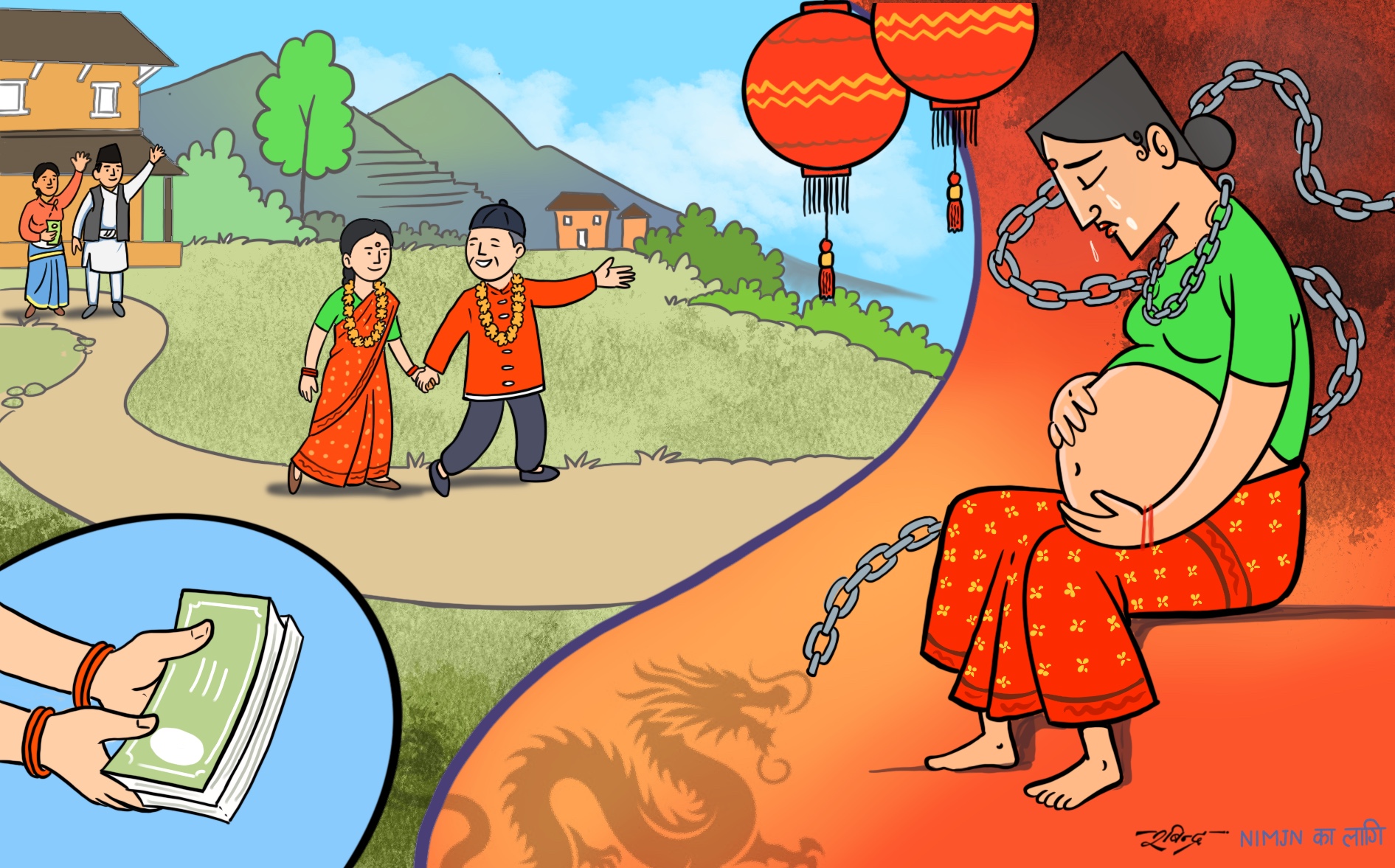
However, the aunt arranged for 12-year-old Ramita to be married to a 40-year-old man in Uttarakhand. Her aunt kept Ramita’s parents in Kanchanpur completely in the dark about the marriage.
Nine days after the wedding, Ramita called her mother using her husband’s phone and revealed everything about her situation. Her mother then traveled to her sister’s house to search for her daughter. Taking her sister along, she went to Ramita’s new home. It was only when Ramita’s husband and father-in-law stated that they had paid money for the marriage and that Ramita could only leave if the money was refunded that her mother realized her daughter had been sold.
After repaying the money her aunt had taken for the marriage, Ramita was freed from that household. However, the aunt argued that a married daughter should not be taken back home as it would spark local gossip and proposed finding another groom for her. Ramita’s mother agreed. The two sisters then accepted money and married Ramita off to another man, Dharmendra Singh, also from Uttarakhand.
Upon learning this, Ramita’s father sought help from Maiti Nepal to rescue his daughter. A team comprising Maiti Nepal personnel and security forces rescued Ramita and brought her back home on February 29, 2024. The police arrested both her mother and her aunt. However, no complaint was filed on behalf of the victim, Ramita, against either of them, and no charges were pressed.
“Stating that they could not file a case against their own mother and aunt, Ramita and her father refused to lodge an official complaint,” said Maheshwari Bhatta, coordinator of Maiti Nepal Kanchanpur. “A 12-year-old girl was married off for money, and after being retrieved from one house, she was married off to another, yet they had to be released without charge.”
According to Maheshwari, the coordinator of Maiti Nepal, this is not an isolated incident. Close relatives turn out to be the perpetrators in the majority of human trafficking cases. Because family members are involved, victims refrain from filing complaints, which creates significant obstacles in investigating suspects and prosecuting human trafficking cases.
The National Report on the Rights Against Human Trafficking (2025/26) states that the number of human trafficking offenses or cases registered with the Nepal Police appears to be substantially lower than the estimated actual occurrence of such incidents, adding that prosecution does not take place in all filed cases. The report by the commission highlights that because close relatives are involved in most cases, initiating legal proceedings against them becomes even more difficult.
“They ask how they can file a case against their own mother or father,” coordinator Maheshwari said. “In most trafficking cases, the involvement of relatives is predominant.” According to her, many also hesitate to file complaints due to fear of social stigma, public exposure of their situation and financial difficulties, among other reasons.
Nepal Police data also clearly reflects the lack of case registrations against those involved in trafficking incidents. According to Police Headquarters, police have rescued 2,476 victims of human trafficking over the past five years. However, only 850 cases were registered during this period.
Prakash Bahadur Bhandari, District Attorney at the District Government Attorney’s Office in Kanchanpur, claims that most cases brought to them are registered but notes that very few reach their office in the first place. “Some cases only reach the police level and are resolved right there. They never come to us,” he said.
Hari Krishna Awasthi, President of the District Bar Association, Kanchanpur, states that victims pull back from filing complaints due to the difficulty of reintegrating into society and the fear of their ordeal being publicized in the community. “Fear of social prestige loss, the hassle of litigation and the lack of direct benefits for rehabilitation are the primary reasons,” he said. “Our society views human trafficking with a negative stigma, creating a risk of further traumatizing the victim.”
The National Human Rights Commission report points to systemic issues for the low number of cases reaching the courts, citing inappropriate behavior by police, the influence of perpetrators, a lack of sufficient evidence and witnesses, distrust in the legal system, and complex legal procedures.
However, Superintendent of Police Netra Mani Giri of the Kanchanpur District Police Office states that cases cannot be registered based on police intent alone. “Not everyone rescued may be a victim of trafficking and justice is ultimately for the victim,” he said. “Unless the victim feels the need for legal recourse, we cannot register a case on our own.” He added that some rescued individuals are simply traveling with relatives for work, making prosecution unnecessary.
Victims fear social stigma, refrain from filing cases
Twenty-one-year-old Sunita and 14-year-old Anita (both names changed) from Raksirang, Makawanpur, are paternal cousins. Sunita is married and has two sons. Following a dispute with her husband, she had been staying at her parents’ house.
One day, Sunita received a friend request on Facebook from a man in Chitwan, which she accepted. Soon, they started talking.
Around the same time, Anita received a call on her phone from an unknown number. The caller was also a man from Chitwan. Before long, both sisters were communicating with these men via Facebook Messenger. The two men were also related to each other.
They claimed to be 20 and 18 years old and said they were working in India. Whenever they chatted on Messenger, they avoided video calls under the pretext that their phone cameras were broken. It was later discovered that the photos they had sent claiming to be of themselves actually belonged to their son-in-law and nephew.
As their conversations continued, both parties eventually decided to travel to India. The two men from Chitwan reached the sisters’ home in an auto-rickshaw, wearing face masks.
In mid-June, while attempting to cross into India through the Gaddachauki border checkpoint, they were intercepted and questioned by Maiti Nepal. The men only removed their masks after being taken to the Area Police Office. Upon seeing their faces, Sunita exclaimed, “Should I call him my husband or my uncle? I am completely bewildered.”
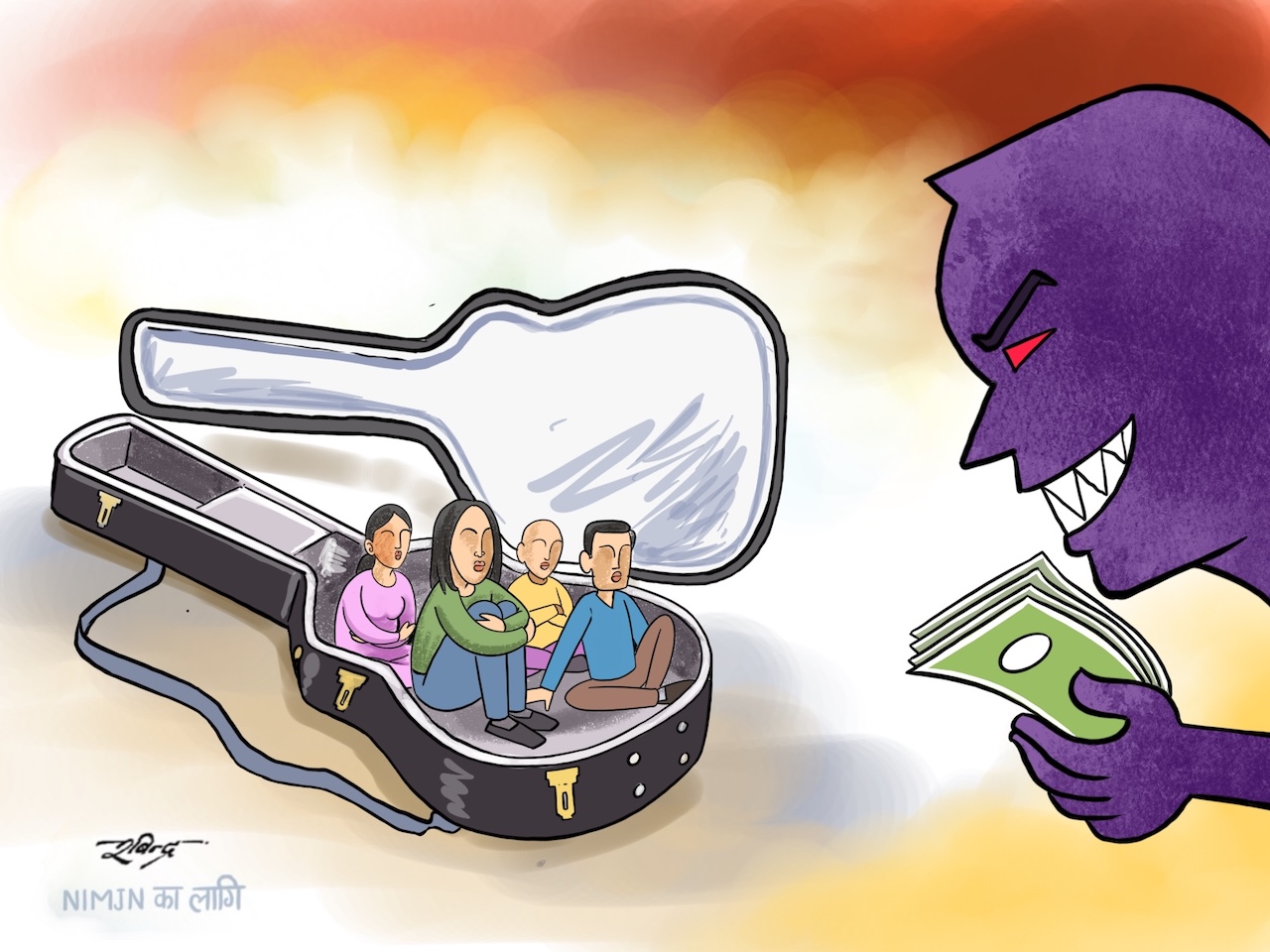
Questioning revealed that the men were actually 40 and 35 years old, and both were married. They were attempting to lure and transport Sunita and Anita into India for human trafficking. The Gaddachauki Area Police Office transferred both men to the District Police Office, while the women were placed in the care of Maiti Nepal.
Maiti Nepal prepared to file a case of human trafficking against the perpetrators. However, the victims, Sunita and Anita, refused to press charges.
“It will ruin our reputation and everyone in our village will find out. Let’s forgive them just this once,” Sunita said. “Besides, we don’t have any money. How would we fight a legal battle?”
Furthermore, the wives of both men had traveled to Kanchanpur to plead for mercy. According to Maheshwari, the wives’ appeals were another reason why Anita and Sunita were unwilling to file a case.
Also read- Betrayed by Blood: How Relatives Lure Teens into Trafficking
Twenty-year-old Ramkumari (name changed) of Aathrai Tribeni Rural Municipality in Taplejung married a young man from a neighboring village two years ago. Having married for love, she began experiencing friction with her husband just two months into the marriage. Consequently, she started living at her parents’ home. She later gave birth to a son while at her parents’ house but contact with her husband ceased entirely.
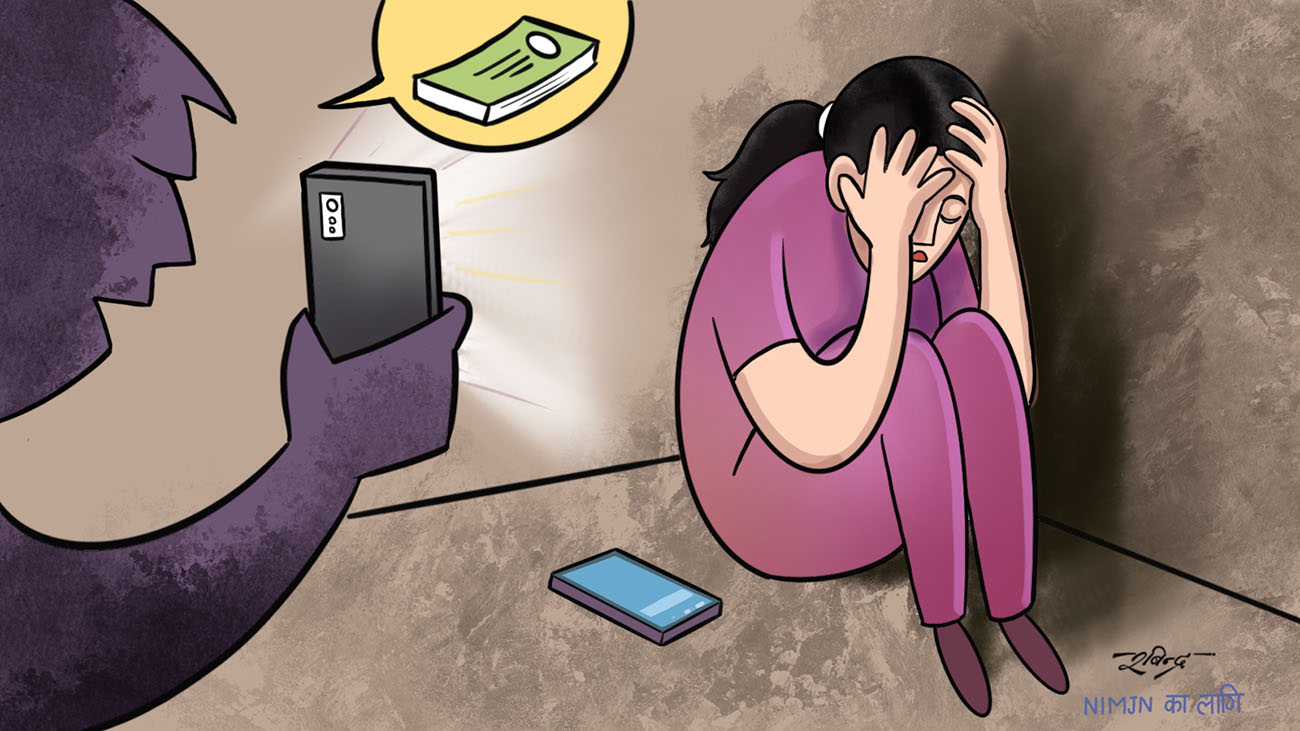
Nearly two years had passed when she received a friend request on Facebook from a stranger. She accepted it without hesitation and they began communicating. Gradually, their conversations turned romantic. Within a month or a month-and-a-half, they began discussing marriage. The man, who claimed to be from Uttarkashi in Uttarakhand, India, and working in Haridwar, lured her with promises of marriage and securing employment for her there.
Enticed by these promises, Ramkumari left her two-year-old son behind and set off for Haridwar. Relying solely on an acquaintance made through Facebook, she had left home to marry a man she had never met or known in person. Having departed from her home on July 23, she was intercepted by Maiti Nepal at the Gaddachauki border crossing.
According to Maiti Nepal coordinator Maheshwari, contact was established with the man after she was intercepted but he refused to come pick her up. “Following someone you’ve never seen, based purely on Facebook, leads into a trap. Now, against whom and how do we even file a case?” she said. “There are numerous incidents where perpetrators identify women facing similar problems in villages, lure them in, and then gradually summon them to India.”
In the last fiscal year, Maiti Nepal Kanchanpur rescued eight individuals from various locations in India. Similarly, they intercepted 175 individuals being taken to India through various border points in Kanchanpur. Maheshwari stated that out of all these incidents, only a single human trafficking case proceeded to prosecution, while the rest were dropped without legal action.
Please adhere to our republishing policy if you'd like to republish this story. You can find the guidelines here.


Comments